

Moving House and The Anchoring Magic of Brand DNA
What luxury fashion's latest class of creative directors can teach us about navigating times of transition.
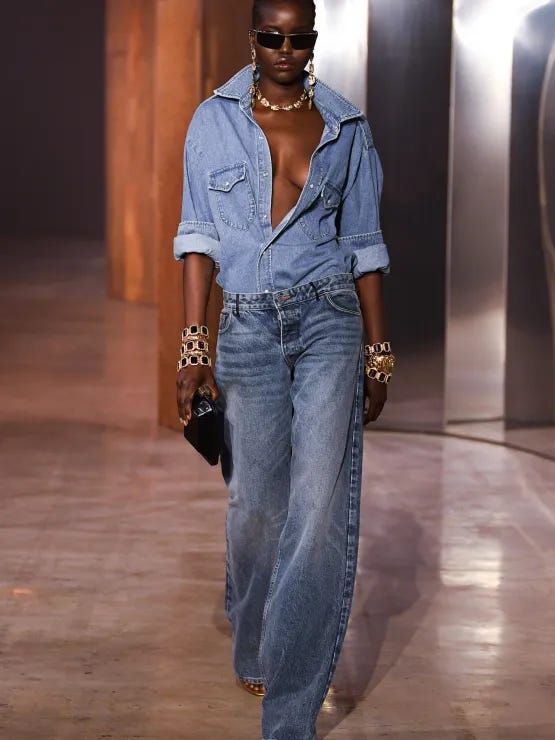
Look from Bally (SS23) under new creative direction of Rhuigi Villaseñor. Image credit: WWD.
Changing of the Guard
Back in September of 2022, Filipino-American entrepreneur and fashion designer Rhuigi Villaseñor revealed his debut collection as creative director for Swiss luxury house Bally. It was a beautiful homage to the heritage and DNA of the 174 year-old brand, citing key elements from Bally’s house style: artisanal leatherwork, refined tailoring, and quiet Swiss precision.
To the discerning eye, the debut collection also displayed clear references to Villaseñor’s own personal brand and influences (Gucci’s über sexiness under Tom Ford; Ralph Lauren’s Americana), peppered with the Californian luxury streetwear insouciance that characterises his own label, RHUDE. As an aside, RHUDE seems to be experiencing its own pause and/or realignment — more on that later.
This year, luxury fashion has been playing its own game of creative director musical chairs in what has arguably been the most significant changing of the guard that we have seen in some time. Recent shifts include:
Creative Director debuts
Matthieu Blazy at Chanel,
Louise Trotter at Bottega Veneta,
Jonathan Anderson at Dior, and
Alessandro Michele at Valentino;
Other appointments
Rachel Scott’s appointment as Creative Director at Proenza Schouler,
Dario Vitale as Creative Director at Versace, and
Giuseppe Marsocci as CEO at Armani; and
Recent departures
Véronique Nichanian stepping down from Hermès menswear after 37 years.
With a recent house move and other not-insignificant life changes taking place during our brief newsletter hiatus, I have in many ways been navigating my own changing of the guard.* Amidst these transitions, and with a debut-heavy fashion month now behind us, it occurred to me that our latest class of creative directors might teach us a thing or two on navigating new seasons with grace, strength, and ingenuity.
*BHDT also turned one over the summer period — happy belated birthday to us!
The Creative Director’s Audit
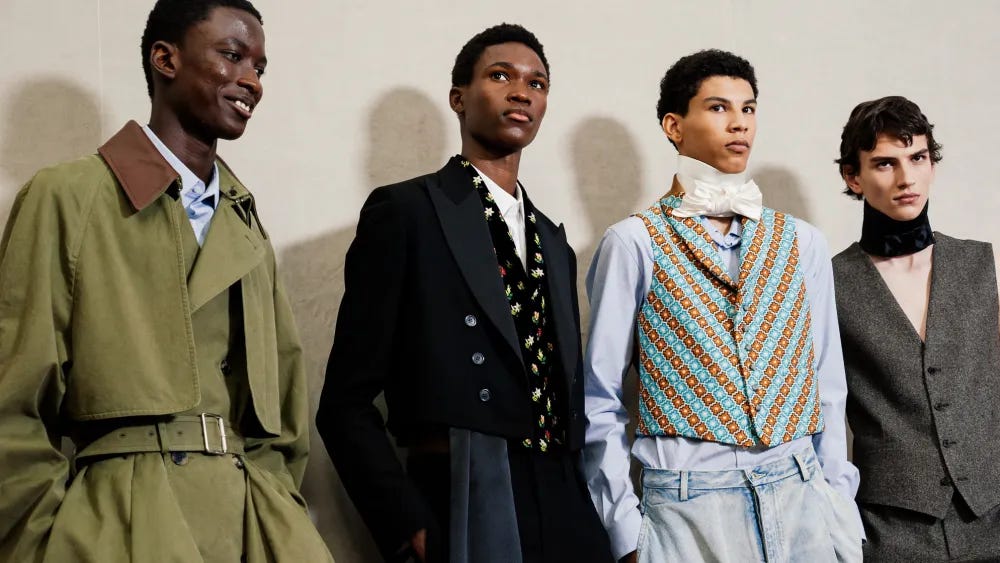
Models backstage at Jonathan Anderson’s reimagined Dior Men’s (SS26). Image credit: WWD.
Any vaguely plugged in fashion enthusiast will tell you that a new luxury creative director typically spends their first moments in office immersed in the house archives, studying the brand’s DNA: visual codes, colour palettes, lines, fabrics, motifs, and silhouettes; the history of its muses; its founding mythology, etc.
This process presumably also tells a designer much about the archetypal “brand woman” (or man, or person). The Saint Laurent woman? Sharp yet sensual; perfectly balancing masculine and feminine. The Chloë woman? Light, romantic, and heavily influenced by 70s bohemia. The Miu Miu girl? Both playful and serious — a woman that could be 18 or 80.
And then — the magical part, in my opinion — the part when a creative director considers this rich DNA against the backdrop of our current zeitgeist, forging a new, forward-looking vision for the brand. When done correctly, their debut collection is a beautiful matrimony of past, present and future, honouring heritage whilst reimagining the same through a contemporary lens.
Outside of fashion, the same logic applies. A newly-appointed CEO might conduct their own audit, identifying profitability, liabilities, and where a brand’s essence lies, before pivoting. Similarly, a private equity investor may pull apart a company’s structure, pruning and offloading, before the planting of anything new.
The Personal Audit: Day Zero
Back to now: what does this mean for us?
In seasons of change, and particularly as we approach the end of 2025, it’s tempting to jump straight into action with a new project, a set of ambitious new goals, or a detailed personal rebrand (likely put together at 2am on a random weeknight using curated Pinterest boards and optimised ChatGPT prompts). But if the fashion houses teach us anything, it’s that transition can benefit from review.
What are the core elements of you?
What materials make up your own personal “DNA”?
What makes you feel the most anchored?
What, if anything, could you let go of in order to move forward?
Much like a creative director’s deep dive into a fashion house’s archives, we too may consider turning inwards during times of change. Sometimes that looks like going back to basics, relearning the loom before we attempt to weave gold from straw.
Ecdysis
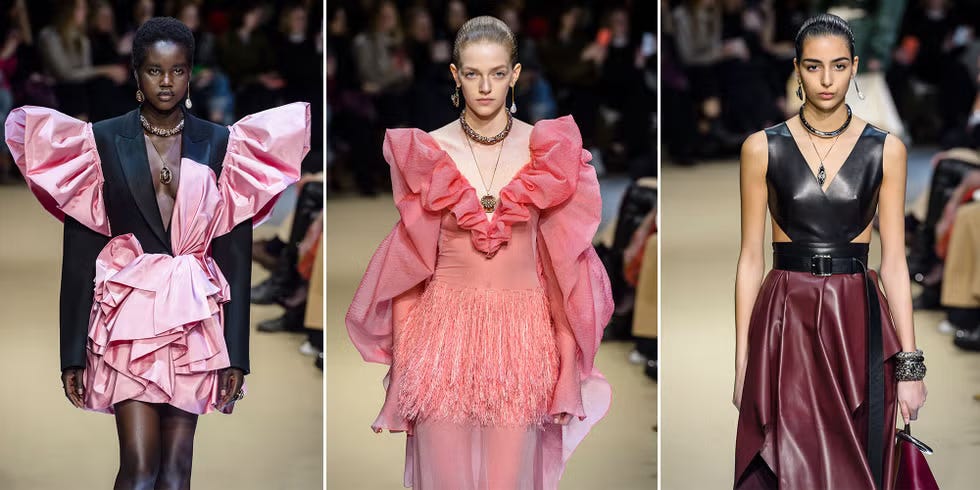
Themes of metamorphosis at Sarah Burton’s Alexander McQueen show (AW18). Image credit: ELLE.com.
Rhuigi Villasenor’s time at Bally may have been cut shorter than anticipated, but his reinterpretation of the archetypal Bally woman and man was one worthy of note. Perhaps most poignant was the choice of title for his debut collection, Ecdysis, which refers to the process of shedding an external skeleton for one’s growth or change in shape.
Shedding is messy and uncomfortable. It’s the pile of boxes in your new hallway. The weeks of living out of your half-unpacked suitcase. A realisation that you’ve outgrown a space that once felt expansive. But it’s also an opportunity for newness.
Whether you’re moving house, changing jobs, or simply entering a new phase of self, ecdysis reminds us that even the world’s grandest houses must occasionally close their doors, audit their archives, and start anew. And that sometimes a changing of the guard is an invitation to re-enter the world as something truer, fresher, and more alive.